© 2016 Flying Toucans

Frequently Asked Questions


Traveling in Costa Rica
When is the best time to visit? Is Costa Rica a safe destination? Where do we fly into? Car Rental Recommendations & Insurance Arriving at the Airport (SJO) What about money? Does anybody speak English? Does Costa Rica have departure taxes? Road Signs Cell phones Phone calling cards Gas Stations Unrefrigerated Eggs
About Flying Toucans Villa
Why should we book directly with Flying Toucans? What’s the reservation process? How private is Flying Toucans? How close am I to the beach? Is there a minimum rental period? What’s the maximum number of guests? Can we contact previous guests? Do you have Managers? How do we check-in to FT? What’s the bedding situation like? What should we bring? What shouldn’t we bring? What are the guests’ responsibilities? When is the best time to see wildlife? Can we feed the animals? Are bugs a problem? No, I meant INSECTS… What about snakes? Sunscreen problems? Can we drink the water? What about maid service? Cooks and Private Chefs Early Check-ins and Late Check-outs Can we invite people we meet to the house? Where did the name Flying Toucans come from?About the Dominical and Uvita Areas
How are the roads? Where can we eat? How safe are the beaches? Is there a tourist information center? What’s the dress code? Where should we shop for groceries? What about buying real estate? Is there a spa nearby? Massages at the house? What services are available in Dominical? What services are in Uvita? Where can I rent a surfboard or take lessons? Is there any nightlife? What about doctors and dentists? Is there public transportation?
When is the best time to visit Costa Rica?
Anytime! The general climate consists of a “dry” season (Dec.-Apr.) and a “green” season (May-Dec.) with shoulders of
mixed weather. In our area, “green” usually means rain in the late afternoon and nighttime, with the daytime being warm
and sunny. The benefit of the “green” over the “dry” is the profusion of waterfalls, the extra-lushness of the flora and a sense
of having the country to yourself. The “dry” season, on the other hand, brings incredible sunsets, starry skies and an increased ability to
travel to some of the more remote areas. Our part of the country is green year-round and does not have the dust and dryness found in
the area of Guanacaste during the dry season. Of our guests who have visited in both seasons, they tell us they prefer the “green”. We
agree. It’s even more beautiful and the rain isn’t a spoiler - if it rains at all.

Is Costa Rica a safe destination?
Yes. We lived in Costa Rica full-time for 5 years and have been traveling there since 1998 and always feel safe everywhere we
go with the exception of parts of San Jose at night. There are very few incidents of physical harm though, like most countries,
there are people who will take advantage of possessions left in cars, etc.

Where do we fly into?
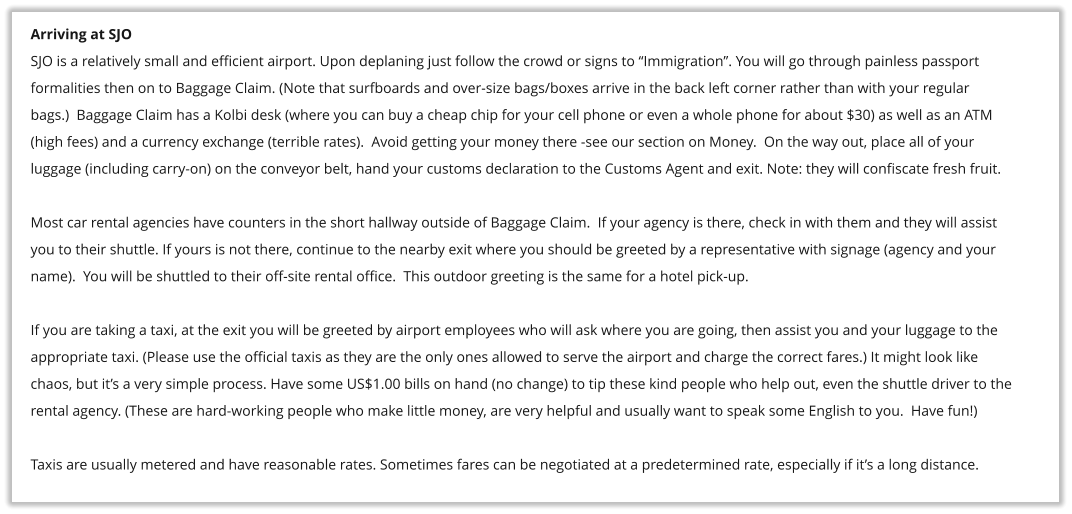
There are two international airports. The main one, Juan Santamaria (SJO) is in the San Jose area and the one used most often by our guests as it’s
about 3 hours away. The other one, in Liberia, is farther north and about 5 hours from Flying Toucans. Another good option, if your schedule works,
is to fly into SJO and hop on a domestic flight on either Sansa or Nature Air to the small airport in Quepos. It’s about a 20 minute flight at a cost of
around $60. This saves time driving between San Jose and the Dominical area as well as doubles as a sight-seeing tour! You can rent a car in Quepos
and drive the 40 minutes to the villa. One warning: these flights are on smaller craft and limit the baggage allowance significantly. Sansa’s website is:
www.flysansa.com. Nature Air: www.natureair.com

Does Costa Rica have departure taxes?
Yes, but many airlines, such as American, United and Delta, Jet Blue and US Airways now include them in the ticket price. As of Feb.
2016, your ticket receipt should show one charge of $27.00 and another one of $2.00. Some airlines, such as Southwest and Spirit, do
NOT (as of 12/2015) yet include this fee into the ticket price. Check this BEFORE you get to the airport to go home. The website for SJO
lists the airlines who have already included the tax in their fees as well as those who have not. Just go to www.fly2sanjose.com and
check the table on their main page. If you’ve already paid, just check in. If you haven’t, you must pay $29 per person PRIOR to getting
in the check-in line. One person may take all of the passports in your group and make the payment at the tax collection desks across
from the airline check-in counters. You may pay by Colones, US$ or credit card. Be aware that credit cards will be assessed a
processing fee.
NOTE: BTW, if you mistakenly pay them but they’ve already been included in your ticket price, there is no refund. The people at the
tax counter can’t tell you if you need to or not. Also, if you get up to the check-in counter and find that you haven’t paid them, you will
have to get out of line and take care of it at the tax desk. These fees go to the government, not the airlines.

Road Signs
Most road signs are fairly obvious and use internationally recognized symbols. Distances are in Kilometers (km). Speed limits are in
Kilometers per Hour (kph). Some theoretically faster roads (like the Toll Road) will give both a Maximum (80 kph MAXIMA) and a
minimum speed (40kph MINIMA). Make sure the 40kph sign doesn’t have Minima below it or you will drive (no pun intended)
everyone behind you loco.
Converting kph to mph is a good thing to learn before you leave home. The math is simple. Multiply the kilometer rate or distance by
0.6 to get the mph. For example, 40 kms x .6 = 24 miles, 100 kph x .6 = 60 mph. If decimal points confuse you, simply multiply the
kph or kms by 6, then drop the last zero in the result. For example, 80 kph x 6 = 480 = 48 mph. You’ll get the hang of it. Just don’t
forget to convert back to mph and miles when you get home!
As for general signs, Costa Rica has made great progress but comes nowhere close to the U.S. in terms of clearly identifying roads, etc.
They do not use house addresses so most directions are in distances or landmarks (including the occasional horse in the field). We
give you comprehensive directions to get from the airport to Flying Toucans.

Cell Phones
Some guests use their cell phones here. Check with your provider BEFORE departure to understand how your particular coverage plan
works. What we usually do is buy pre-paid SIM cards at the Kolbi counter in Baggage Claim and put one in each of our phones for use in
Costa Rica. It’s super inexpensive and works well. Consult your carrier before leaving to see if they need to unlock your phone first.
There are Kolbi stations all over the country and you can easily recharge it at places like the local grocery store. If you don’t want to
mess with your phone, you can buy a cheap cell at Kolbi for about $30 already loaded with minutes and able to make both local and
international calls. To minimize using your minutes, place your international call and have them call you back. Keep in mind that you
can use these phones in any country by just buying the local SIM card upon arrival. Note: We also let our guests use the cell phone at
the house to make local calls when they are out and about (though it might not always be available). The house has a land line, too.

Phone Calling Cards
If you have a pre-paid calling card from your provider or a retailer like Costco or Sams Club, make sure you contact them
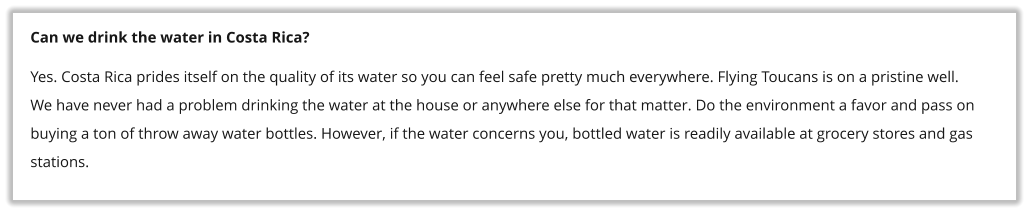
BEFORE leaving home to get the correct “access” numbert for calling FROM Costa Rica to your home country. Otherwise,
you won’t be able to use it here.


Where did the name Flying Toucans come from?
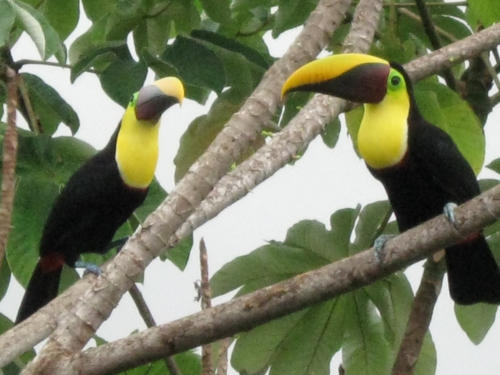
During our first trip to Costa Rica we went everywhere constantly on the look out for toucans and did not see them regularly until we came to this property. At times, it seems that everywhere you look a toucan is in flight. If you haven’t seen or heard one on the go, you’re in for a special treat!
How private is Flying Toucans?
Well, let’s just say that you could run around in your birthday suit and only the toucans and the monkeys might blush (besides, they’ve
already seen you in the shower…). We have a gate at the entrance to the 3 acre property and then another locking one between the carport
and the villa. We keep both of them open the majority of the time, but you can close them for total privacy. There are a couple of villas in the
jungle but far enough away or below you that they won’t be a concern. Having these views and total privacy, but still so accessible to
restaurants, activities, etc. is a combination almost unheard of. Also, our managers and staff do not live on the property so there’s no one
lurking about other than by arrangement with the guests.

How close am I to a beach?
Close enough to walk! Well, it’s more of a hike down to the two private beaches with tide pools and a 35’ waterfall but well worth it at low tide.
These beaches would be classified more as good for exploring, looking for wildlife, fishing, or checking out the tidepools rather than
swimming. By car, there are numerous beaches north and south of the house within a 4-20 minute drive (and further) that allow for a wide
range of beach-related activities. There’s something for everybody!

Do you have managers?
We are privileged to have a wonderful couple managing Flying Toucans since 2008. Daryl and Donna, previously from Charlotte, are long-time
residents of Costa Rica and live nearby. Daryl will come to meet you personally when you arrive (or when arranged) to go over the house and
property. They’ll be delighted to help you at any time during your stay with questions about Flying Toucans, the area or to make activity/dining
reservations, etc… They’ve been around a long time and are an excellent source of information on what to do (or what NOT to do), where to eat,
etc. We’ve always had excellent feedback from our guests about this lovely couple. Their contact info will be provided in the driving directions.

What’s the bedding situation like?
We have two suites. One has a king bed. The other has a queen bed and a double size futon couch that makes into a comfy bed (due to the
4” foam pad on top of the futon mattress). There is also a single cot with a 4” foam pad for an additional guest that can be placed in either
bedroom or elsewhere in the house. If you have more than two adult couples or are a family traveling with several children and would like to
know more about the setup, we will be glad to discuss the specifics to make sure the arrangements are suitable to you.

What should we bring?
Numero uno: Binoculars! Also, always be prepared with adequate sun protection. Many products are available here but if you must have a
certain brand or type, bring it along. If you have special vitamins, food items or snacks you (or more importantly your kids) can’t live without,
pack them. A small phrase book or dictionary always comes in handy. Camera batteries and disposable cameras are available at fairly
reasonable prices these days but if you need something special, bring it. If coming in the green season, shoes that can get wet and a light rain
jacket will make things more enjoyable. Having said all that, PACK LIGHTLY! We have a washer and dryer and the dress code around here is
super casual. See the “Dress Code” FAQ for more info.

What shouldn’t we bring?
We provide an initial supply of such items as coffee, toilet paper, Kleenex, paper towels, napkins, bath and hand soap, laundry detergent,
liquid dish soap and dishwasher tablets, charcoal and BBQ starter.
We have a full-size washer and dryer, so you don’t need a lot of clothes. Our area of Costa Rica is very casual, so keep that in mind.

Can we feed the animals?
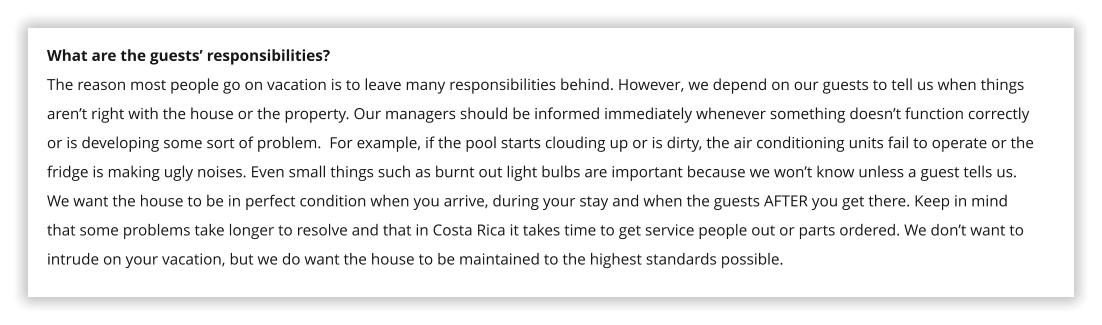
Unfortunately we have had raccoons and monkeys visit inside the villa in response to guests offering them food. Although this is entertaining,
they get accustomed to this and come in when you aren’t there or after you’ve gone back home and cause damage to the furnishings and
perhaps your personal items or those of future guests. They have been known to open the fridge and cabinets. We ask that you refrain from
tempting them with food. We have had success and great pleasure feeding the toucans (and any other birds or wildlife) at the feeder on our
deck. We put out small bits of papaya and banana for them. Lucky guests have even hand-fed the toucans. What a photo op! Our managers
can often tell you where Tarzan, our sloth, “hangs out” and what wildlife is presently there.

No, I meant INSECTS…
Oops, sorry. You mean mosquitos, spiders, roaches, etc… People don’t want creepy crawlers or bugs bothering them on their well-
deserved vacation. Neither do we. We spent 5 years learning about our property so we would know what to expect when we built the
house. Would armies of unwanted insects cause our open-air design be a colossal mistake? We even camped on the property for a
season to make sure that the bug problem wouldn’t be a problem. We are delighted with the results and our guests often comment on
how few insects they notice. You may see non-biting ants searching for crumbs and moths that are attracted to lights at night -
sometimes none and sometimes more. Never has a guest commented when they left that bugs were an issue… although some scratch
their heads wondering how that’s possible in the jungle.

What about snakes?
As this is a nice house with good plumbing, we have found that plungers are sufficient. So far it has not been necessary to use
snakes to eliminate plumbing issues. For snakes of the reptilian type, Costa Rica is known to have a number of both venemous and
non-venemous snakes, but you will most likely never see one. We have a reptile book at the house so you can educate yourself on
the different types of snakes found in Costa Rica or you can take an interesting trip to the local live snake exhibit to see them in
person. We lived in Costa Rica full-time for 5 years and never saw a dangerous snake and haven’t heard of guests ever seeing one.

How are the roads?
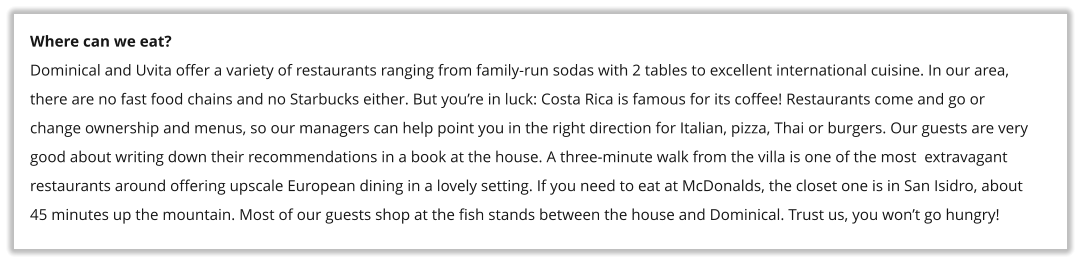
Very good. The main routes between the airport and Dominical are in excellent condition. The main road through the village of Dominical
is still unpaved and usually rutted and bumpy. Since business owners and residents have debated the wisdom of paving it for years
because they don’t want people driving fast, nothing has been done. The short access road off the main road to Flying Toucans, though
most of it is unpaved, is in great shape year-round and never requires 4-wheel drive. For the adventurous, steep mountainous roads on
the of side of the main highway require 4-wd, especially during and after rain. Please be aware of wildlife crossing the roads. With the
improvement of the roads, cars are traveling faster and threatening the animals as they move from one location to another. Access roads
to beaches are typically unpaved and may or may not require a vehicle with higher clearance.

Is there a tourist information center?
Our managers are very knowledgable of what to do in the area and they will even make reservations for activities, dining, etc. In Uvita, there is
the Uvita Information Center that our guests have found very helpful, too. We also provide activity information at the villa to get you started
and our Guest Comment book gives you the scoop on what to do (or not to do).
Most activities can be booked after you arrive. This is advisable because of weather conditions or jet lag or just wanting to laze by the pool.
You’d be amazed at how many of our guests started off wanting to do an activity every day but wound up never leaving the pool and the
wildlife at FT.

Where should we shop for groceries?
You’ll find most things you need within 10 minutes north and south of the villa, with the exception of specialty items. Stores in Uvita carry the most
American selections (which can be pricey) and also offer fresh meats. Dominical has some fruit stands as well as a mom-and-pop market. Our
coastline offers a variety of fresh seafood options, so be sure to check out the small roadside stands. By the way, Alajuela (by the airport) now has a
Super-Walmart and whule they may offer more selections than in our area, the pricing isn’t necessarily cheaper. If your schedule allows, a stop there
might also be an option for you before heading down to Dominical. (FYI- this is not the same as an American-style Wal-Mart.)

Is there a spa nearby? Can we get massages at the house?
Yes. About a three-minute walk from Flying Toucans, Cuna del Angel offers a full-service spa that does manicures, pedicures, hair cuts,
massage and beauty treatments. They even have a dermatologist who comes in periodically. We have had positive feedback from
guests who have taken the short stroll to the spa.
If you are interested in a massage at the house, we have a lovely American gal who will spoil you in front of our gorgeous view. Guests
seem to like her a lot! (She is not part of Cuna del Angel.)

How safe are the beaches?
With such an abundance of beaches in the area, there is something for everyone, including excellent swimming beaches suitable for younger
children. The beach at Marino Ballena National Park (just south of us by about 6 miles) is the best place to swim for all age groups and offers a
beautiful location with the “Whale’s Tail” sand spit that can be walked on during low tide. It also has restrooms and showers (as well as a fee). On the
other hand, the beach at Dominical, well-known for surfing, can have rip tides and swimmers are cautioned about this by signs and the lifeguard.
Aways use caution when exploring new waters and never swim alone.
As for safety regarding cars and personal belongings, use common sense like anywhere else in the world. Don’t leave valuables in the car or
unattended on the beach. Bring as little as possible with you and find a away to enjoy the water or a stroll on the beach without leaving important
items behind.

Is there any nightlife?
We’ve heard that 75% of Costa Rica’s wildlife is active at night. If your version of nightlife is more traditional, check out the local establishments
for various activities including live music. Nightlife is variable and can fluctuate with the season. Also, there is usually somewhere to watch major
sporting events, so if you want to catch the Super Bowl or something else (especially soccer), you might be in luck. Check with our managers -
they are usually clued in as to what’s going on.

Are there doctors and dentists nearby?
Yes, in Uvita. Costa Rican pharmacies usually have a person on hand who is trained to assist in diagnosis, medications and injections (flu,
antibiotics and vitamin shots). And many drugs are much cheaper than the States. We usually go there before going to a physician. Hospitals are
found in San Isidro (45 minutes east) and Cortes (45 minutes south). We also have annual routine bloodwork done in San Isidro because of the
cost and ease of getting it done. Did you know that Costa Rica has very good and inexpensive dental care? We have all of our check-ups,
cleanings and major dental work (Root canals, crowns) done in San Isidro. We tried a dentist in Dominical but did not find the quality very good.
For more involved medical procedures (such as dermatology, knee and eye surgery) we go to CIMA hospital in Escazu (close to San Jose).
Excellent doctors and much better prices than at home.
If you get bored (ha!) and want to try out medical options, just let us know…

Is there public transportation?
While we highly recommend having a rental car, there are times when your group will want to go in different directions. Both Dominical and Uvita have taxis. The
bus stop is an easy four-minute walk from Flying Toucans. For example, if you are traveling with young people who want to hang out in Dominical and do the surf
thing, they can get a bus into town and take a taxi back if the bus schedule isn’t to their liking. However, because of the lack of regular bus runs, we do not think that
public buses are advisable as your primary travel mode in our area.

Gas Stations
The nice thing about gas stations In Costa Rica is that they all offer the same pricing and pump the gas. You are not allowed to pump your own. Fuel is
more expensive than the U.S. and sold in liters rather than gallons. It’s 3.8 liters to a gallon (roughly 4 to 1). They will also check your tires and clean
your windshield. You don’t have to, but if you have a good experience there, you can tip them a little. This is a good way to get rid of all your change
when filling up your rental car on your way to the airport!
Note: We have had some problems with credit card fraud after getting gas, so we always pay cash. (They take the card into the office instead of being
able to swipe it at the pump.)

Unrefrigerated Eggs
Eggs in Costa Rica are NOT refrigerated. Most Americans don’t know that you only have to refrigerate eggs once they have already been refrigerated. So
when you’re shopping, don’t worry if you see eggs at room temp. Keep in mind that if you take room-temp eggs home and plop them in the fridge, they’ll
have to stay that way until you cook them.
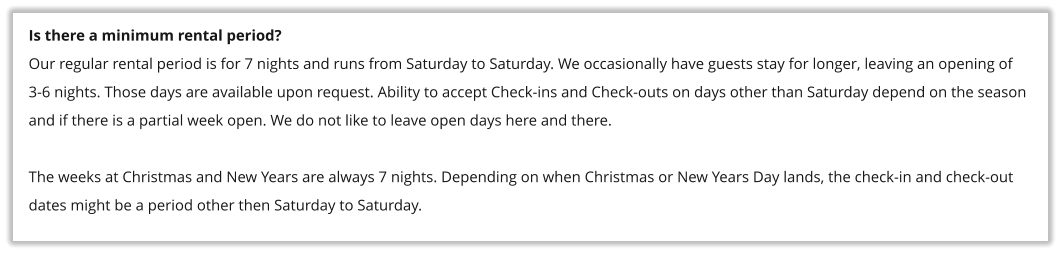

How many guests are allowed?
Flying Toucans is a two-bedroom home to be used only by the registered guests. It is perfect for two couples or a family with 2-4 children that
don’t mind sharing beds. We will be glad to review the specifics with potential future guests to make sure that the bedding situation works.
Groups of more than six guests might not be accepted. The property is not suitable as a wedding venue or for large parties, even if guests are
staying off-property.

What’s the dress code?
Casual is the key word. Pack lightly and bring only the necessities. We have a washer and dryer at the house so leave the huge suitcase at home
and bring just a few things - you’ll be glad you did! Shorts, swimsuits, t-shirts or lightweight cotton shirts, a pair of long pants (for travel or
horseback riding), flip flops, sandals, closed-toed shoes (for hiking or horseback), a casual summer dress or skirt. Beach attire (tank tops, shorts,
beach dresses, sarongs, etc.) is to Dominical what a suit is to a board room. This “look” however, while suitable to a beach town, is not
appropriate in San Jose or large towns that are not on the beach, such as San Isidro. Just about everybody in San Isidro wears jeans and casual
attire, but in San Jose the look is much more professional. If you do not plan on going to higher-end places in San Jose or luxury resorts, don’t
worry too much about it. And remember, you’ll probably want to pick up some things while you are here. Remember, LESS is more.

Car Rentals
Definitely rent a car. While 2-wheel drive is always sufficient to get to Flying Toucans, you may want a 4-wd as Costa Rica is a fascinating country to explore.
We recommend renting from major companies rather than small local operators because most large well-known companies have offices at the airport, are
easy to book via the internet and have better cars and service if something goes wrong. If you are traveling in the high season (Christmas-April), reservations
should be made in advance to ensure availability. In the low season (May-early Dec.) you can make a reservation or rent a car upon arrival from one of the
rental counters near baggage claim. Daily rental rates are reasonable but please be aware that there is mandatory insurance ($15/day 2-wd or $20/day 4-wd)
that adds significantly to the cost. They surprise you with this at the rental counter, NOT when you reserve the car! If you fly into Quepos, there is a Budget
office at the airport with the other companies located in town.
Veniam cillum esse eu, sed proident eu lorem minim fugiat proident amet adipisicing occaecat? Do id labore sed consectetur deserunt incididunt. Culpa sit amet anim
nostrud in reprehenderit in id labore anim, adipisicing duis. Fugiat incididunt magna. Sint commodo consectetur est velit incididunt anim, consectetur laboris voluptate id
adipisicing id dolor excepteur.